





Written by Annie S.
Ryoko’s Guide to the Yokai Realms is a sprawling 5E sourcebook that offers DMs a massive toolbox of yokai, kaiju, new character options, crafting systems, and supernatural environments to build into their TTRPG campaigns. Its companion adventure book, Wrath of the Kaiju, takes five of these kaiju and places them into their own adventures, each with its own region, investigation, and, finally, a climactic confrontation with the mythical creature itself.
Czepeku has already created the official battlemaps included in Wrath of the Kaiju, but these adventures take the party through far more than their final battlefields. Below, we’ve picked out some other settlements and wilderness locations your group may pass through along the way, paired with maps that can bring those parts of the adventure to the table too.
⚠️ Players, turn back! There are adventure spoilers for Wrath of the Kaiju ahead. Send this article to your DM instead, and come back after you’ve survived the hunt.
Arena of the Armoured Kaiju
1. Kihōsō Settlement — Beetle Tribe Canyon
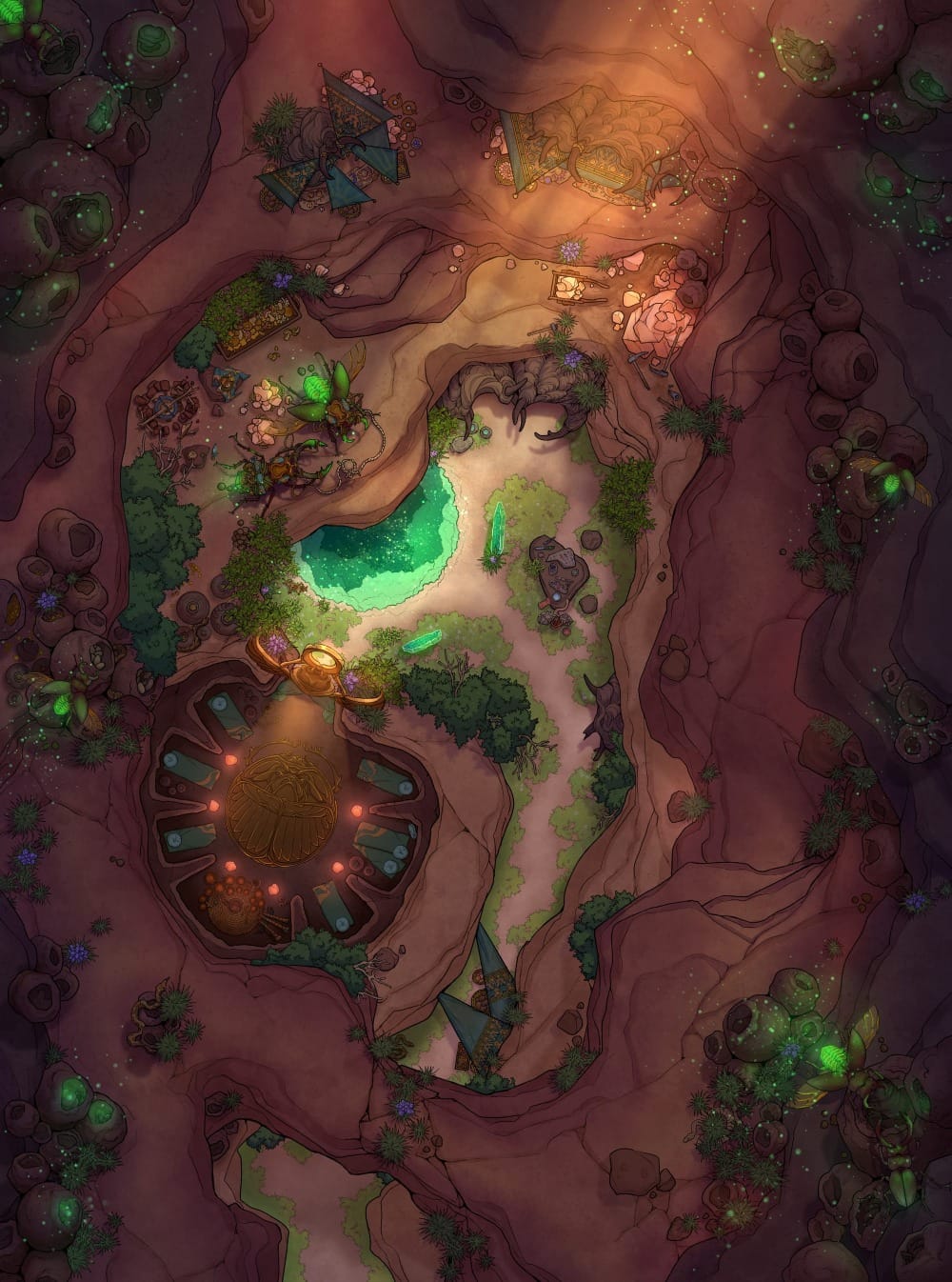
Kihōsō is a strange city in the Yokai realms, with rolling hills of maroon grass, yellow sulphurous rivers, and homes grown from enormous plants. Giant insects, well suited to the acidic environment, are part of everyday life here—beetles replace beasts of burden, and dragonflies serve as mounts for watchmen, among many other examples of the region’s close relationships with arthropods.
This Beetle Tribe Canyon map is one interpretation of a settlement nearby or under Kihōsō —while its rocky subterranean setting is different from the city’s rolling hills, the map captures one of its most memorable qualities beautifully: people building their lives alongside enormous insects. Use it for an outlying Kihōsō settlement, or a section of the wider insect-dominated Tofuoka Hills.
2. Tofuoka Hills — Sulphur Planet
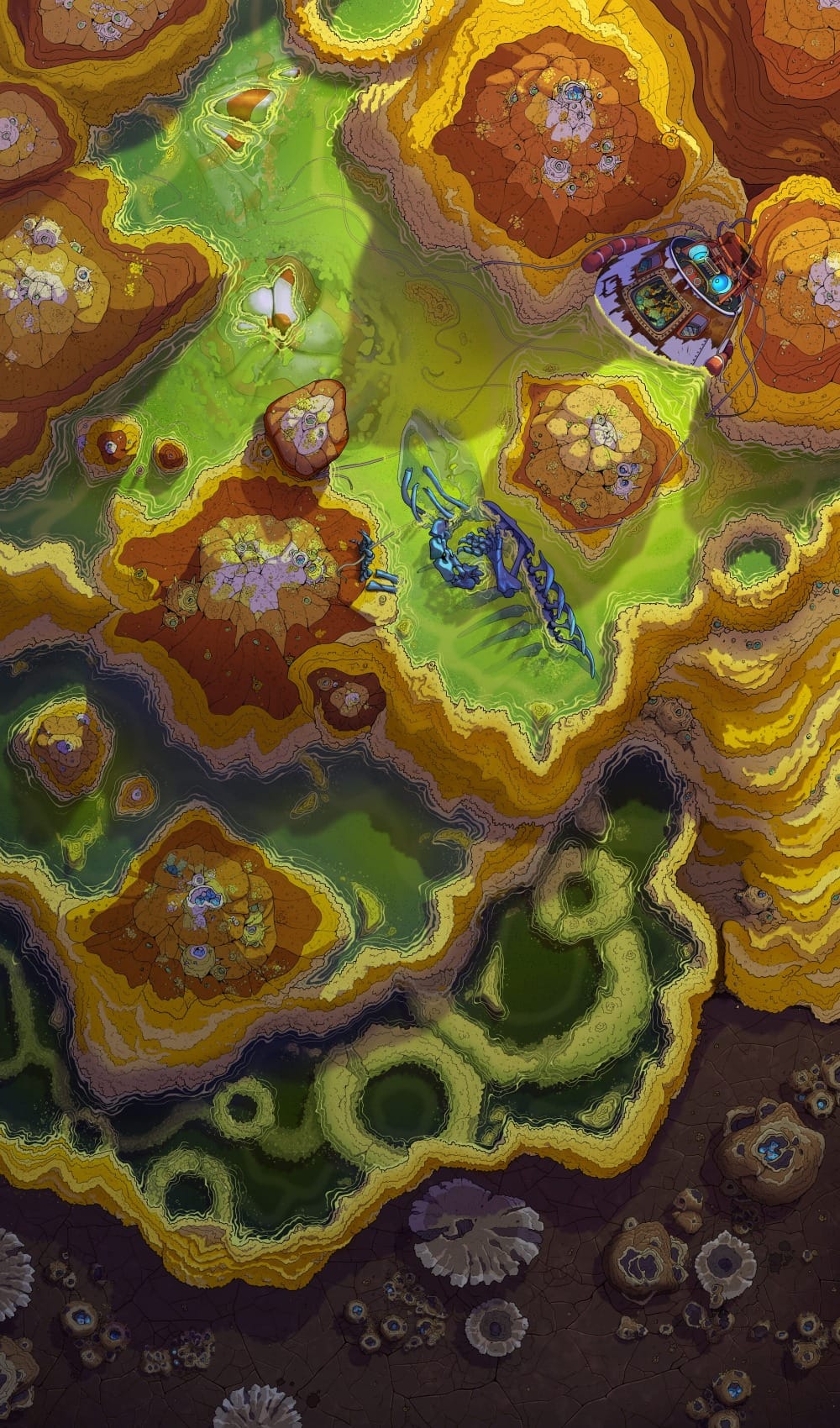
The Tofuoka Hills are rich in sulphur, with surface water so impotable that local inhabitants must instead rely on extremely deep wells. The rain can also turn acidic, making the environment difficult for ordinary animals, and leaving arthropods to fill many of the region’s ecological niches.
This Sulphur Planet map is a strong match for a harsh travel map through the Tofuoka Hills. Its lurid mineral terraces, sickly yellow pools, and insectoid remains capture the region’s sulphurous, hostile wilderness well, making it a good fit for travel through the hills beyond Kihōsō.
3. Kihōsō Aquifer — Cavern of the Venom Queen (Toxic)
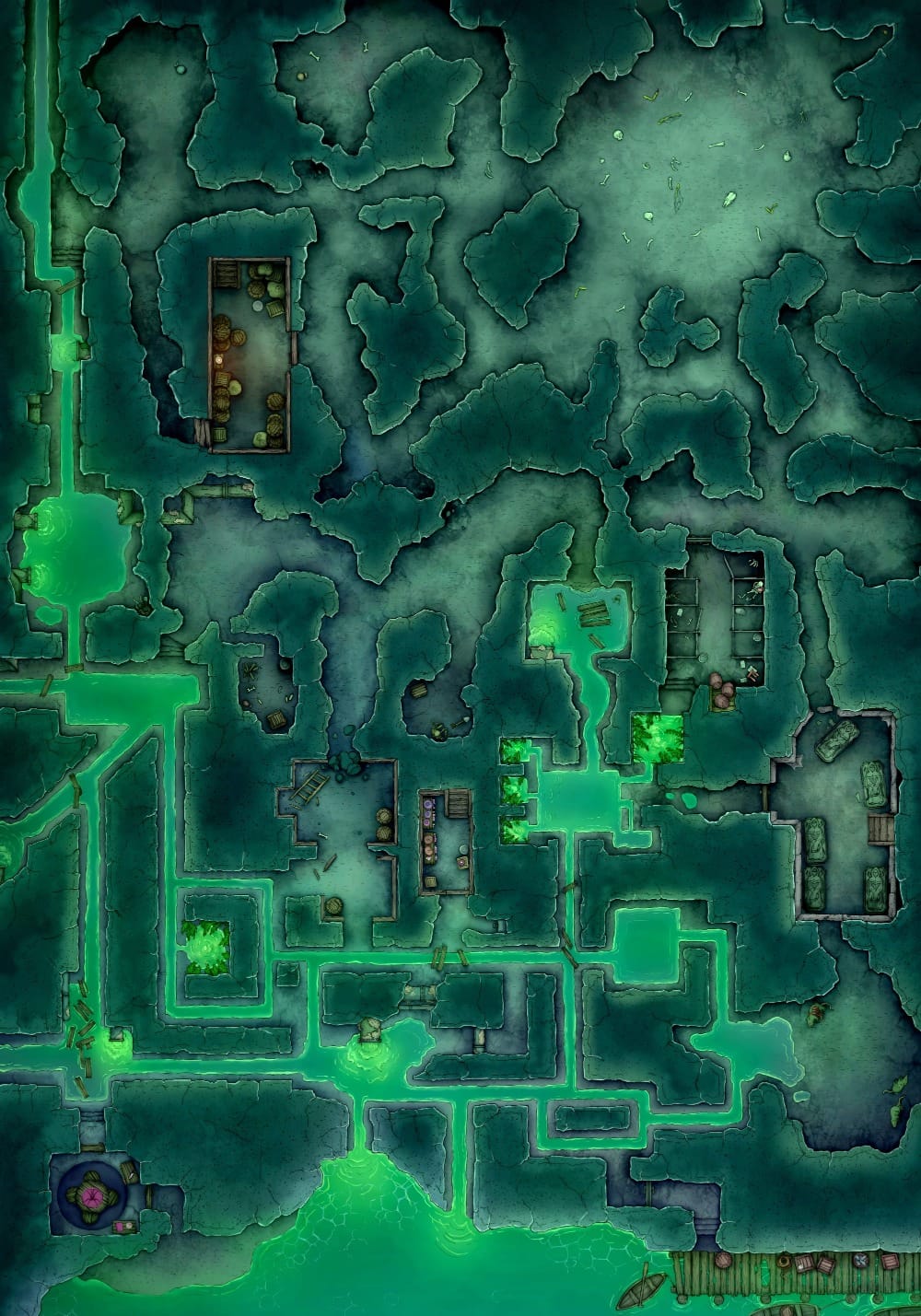
Reaching Kihōsō’s aquifer is an adventure in and of itself. The party must enter a cave system through a small catacomb beneath the city, before pushing through flooded passages, winding tunnels, and territorial kabuto.
The toxic variant of this Cavern of the Venom Queen map is a dramatic interpretation of the journey underground, with visibly hazardous waters and sprawling tunnels for expanding the eight-hour descent into a proper dungeon crawl before the party reaches Nomi’s spawning ground.
Spire of the Storm Herald
4. Abandoned Outpost — Fortress Prison (Rain)
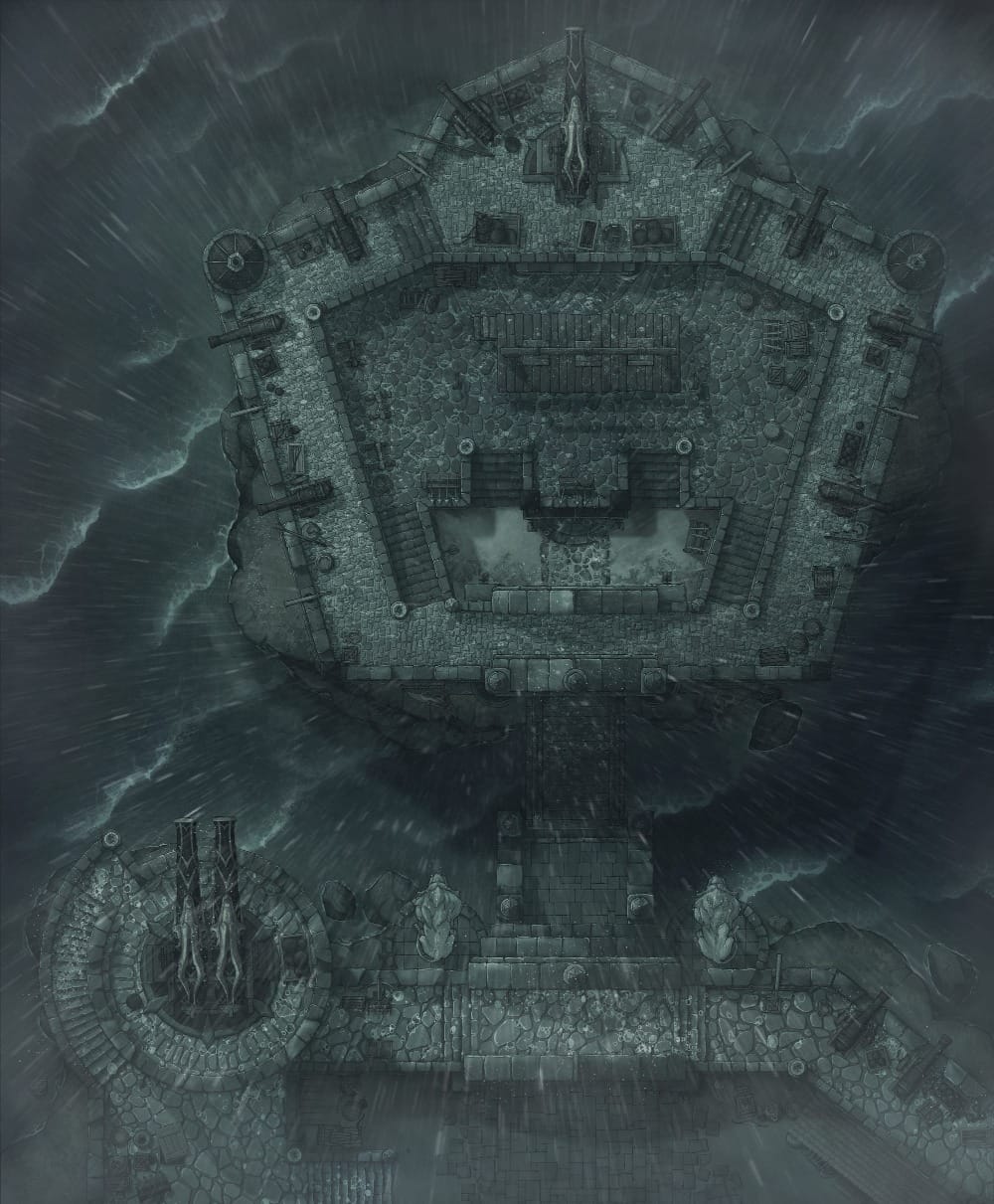
As the party makes the long climb up toward the summit where the Eyes of Iron have provoked Raiko’s wrath, they come across an abandoned military outpost. The old stronghold gives them a chance to regroup and search for useful supplies before continuing, providing tools, armour, materials, rooftop defences that can be repaired, and hidden thunderarrows.
This Fortress Prison map works well as a battlemap for this stop along the ascent, with its fortified walls, rooftop defences, and storm-lashed setting giving the party an atmospheric space to loot and prepare before heading higher into Ironspire.
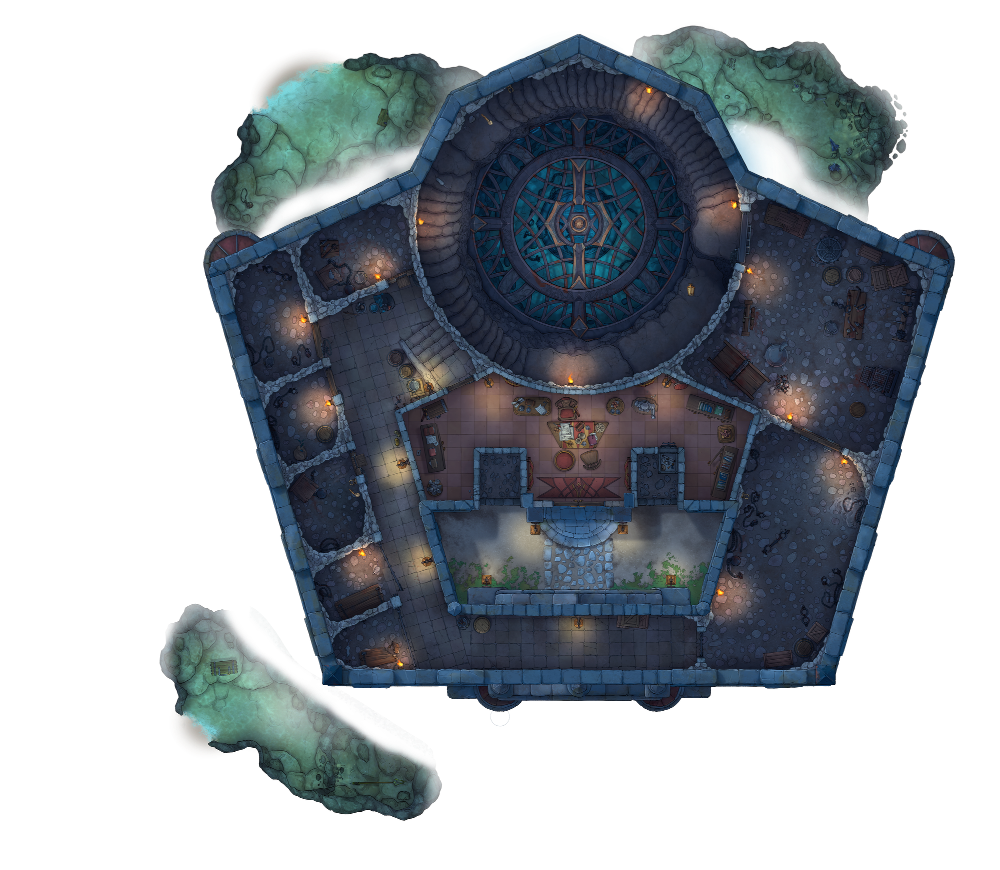
The map also comes with interior levels for adding exploration encounters to the outpost.
5. Tetsumine Basin Mining Settlement — Royal Mine Town
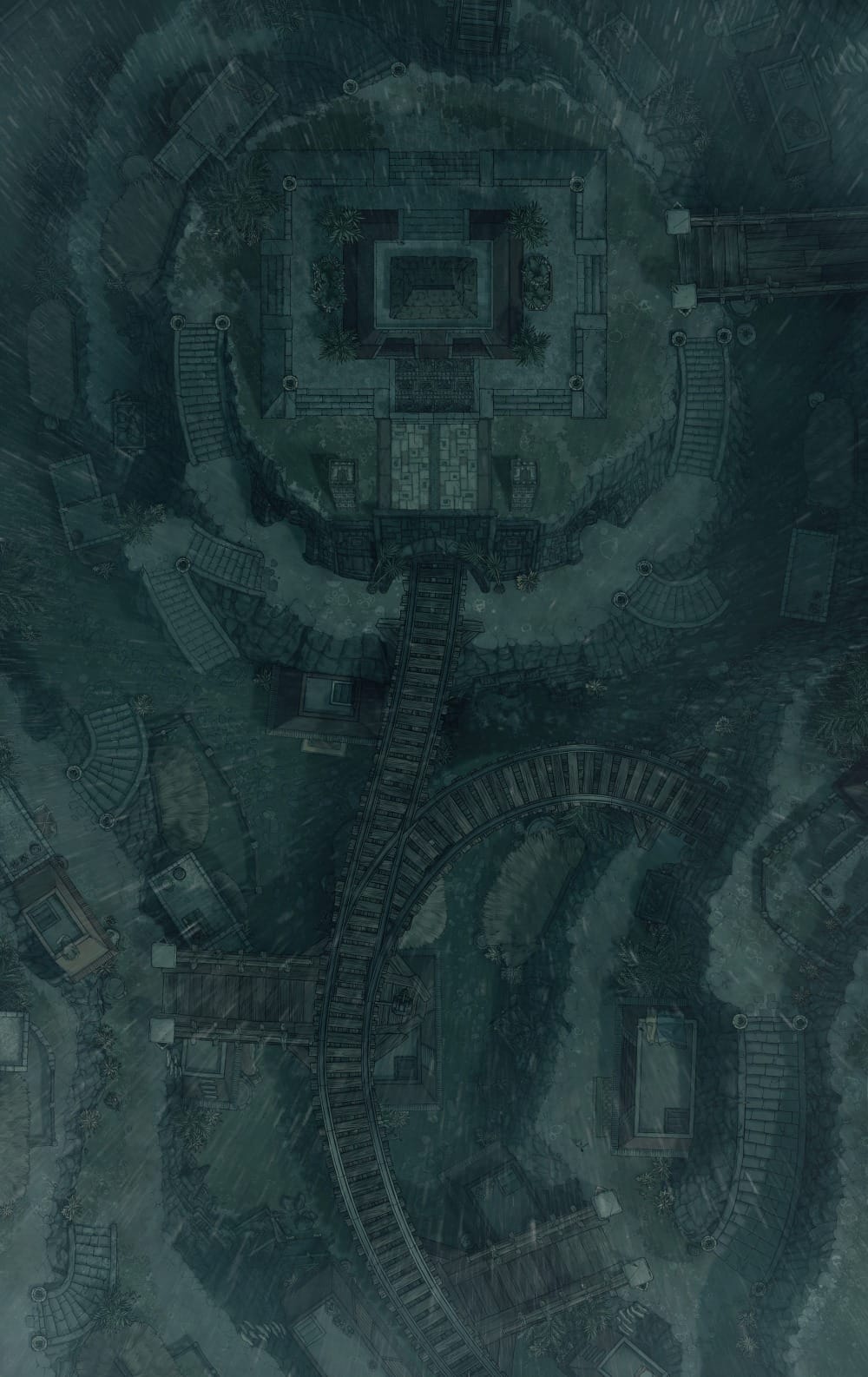
Tetsumine Basin is described as a flooded caldera where dozens of ore-rich stone spires rise from the lake. These spires have become labyrinthine homes for miners and fisherfolk, with settlements built around the region’s mineral wealth.
This Royal Mine Town map makes an excellent interpretation of the wider mining infrastructure around Tetsumine. The minecart rails, stacked levels, and buildings tucked into excavated rock help establish Tetsumine as a busy working region shaped, literally, by plentiful excavation and the mining industry.
Rise of the Living Fortress
6. Verdant Gorge — Mountain Monastery
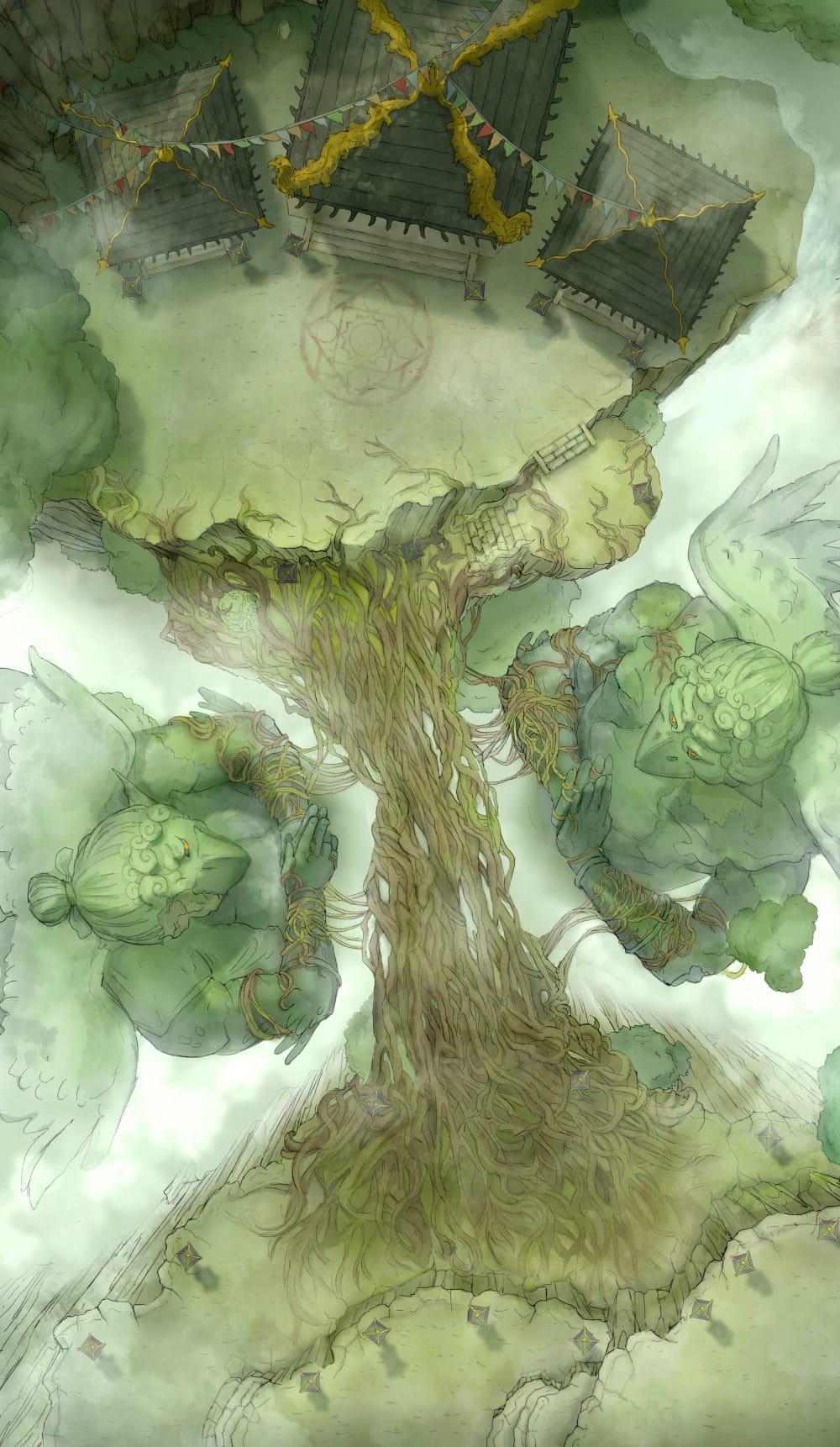
Verdant Gorge is a small community built into the mossy cliffs of a narrow gorge in the lush Pondermoss Weald. Bridges grown from enormous roots criss-cross the gap between the cliffs, while the surrounding rainforest is dotted with shrines, tombs, and monasteries tended by local sages.
Few maps line up quite so neatly with Verdant Gorge’s most distinctive features as this Mountain Monastery, with its traditional temple buildings and enormous tangled roots spanning the gorge. The colossal winged statues are also an especially fitting embellishment for a book all about encounters with enormous kaiju.
![Illustration of a mountain monastery overlooking a misty gorge, framed by two colossal winged stone guardians draped in moss and roots. A bridge of tangled roots leads from the viewer to the temples, as sunlight streams down around the statues.]]](https://storage.ghost.io/c/7f/19/7f196a9d-73be-469d-952f-2907a7dff633/content/images/2026/11/MountainMonasteryOriginalDay.gif)
The map also comes with an animated illustration that provides a stunning player-view look across the gorge.
7. Pondermoss Weald — Overgrown Magic Forest
Dense and temperate, the Pondermoss Weald is one of the oldest forests in the Yokai Realms. Thick loam covers the ground, huge trees rise overhead, and long beards of moss hang from their branches. Kodama are common here, inhabiting plants and giving the region its nickname: the Living Forest.
This Overgrown Magic Forest map fits easily into the party’s journeys through the Weald, with its luminous vegetation and glowing motes making the supernatural nature of the forest immediately clear. It makes a great travel map for the party’s search for the Wandering Earth, whether for a combat encounter or as a campsite for a long rest.
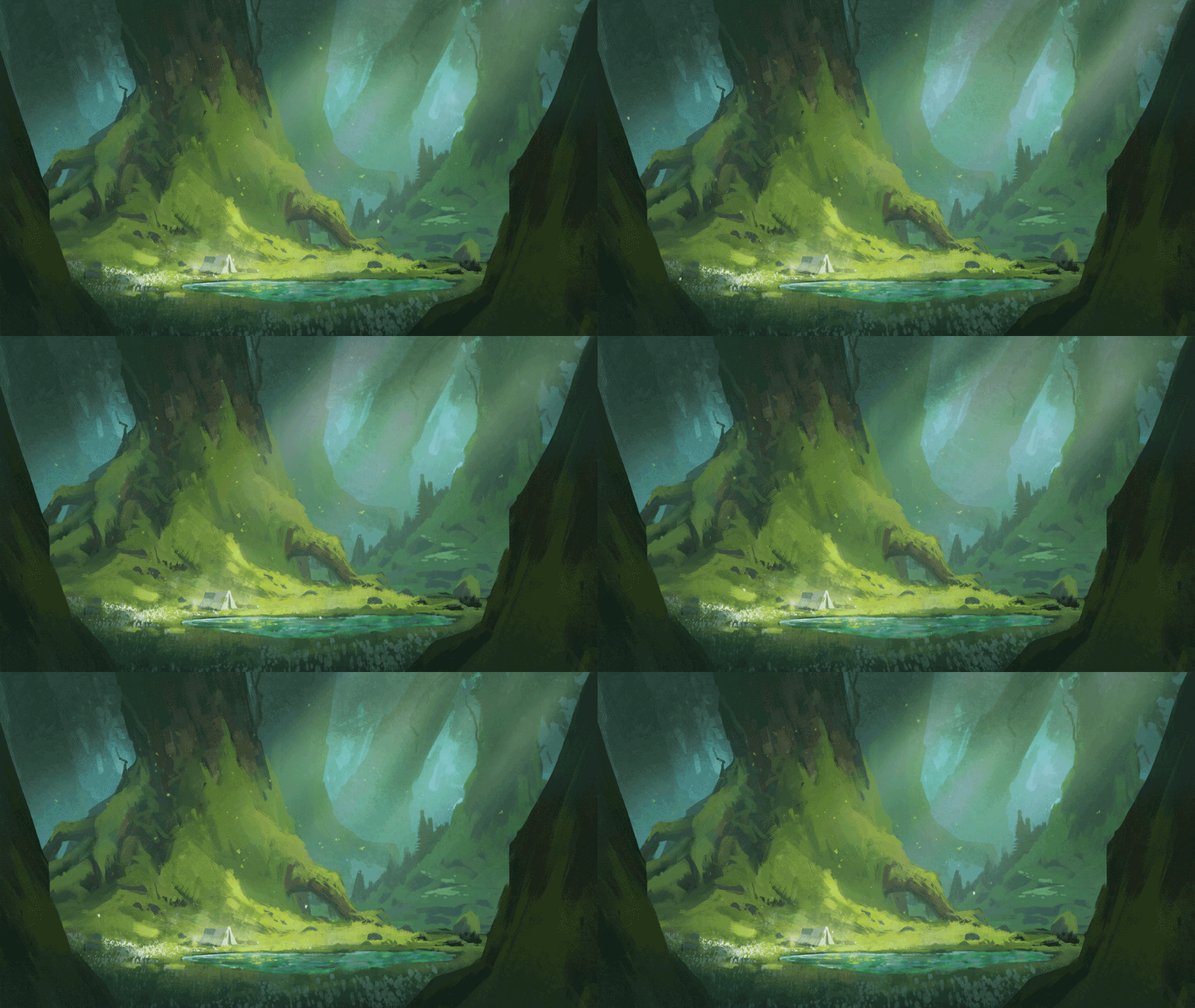
This map also includes an animated illustration that gives the players a closer look at the towering, moss-covered trees of the Living Forest.
Phantom of the Mourning Tide
8. Yūsha Village — Beachside Bazaar
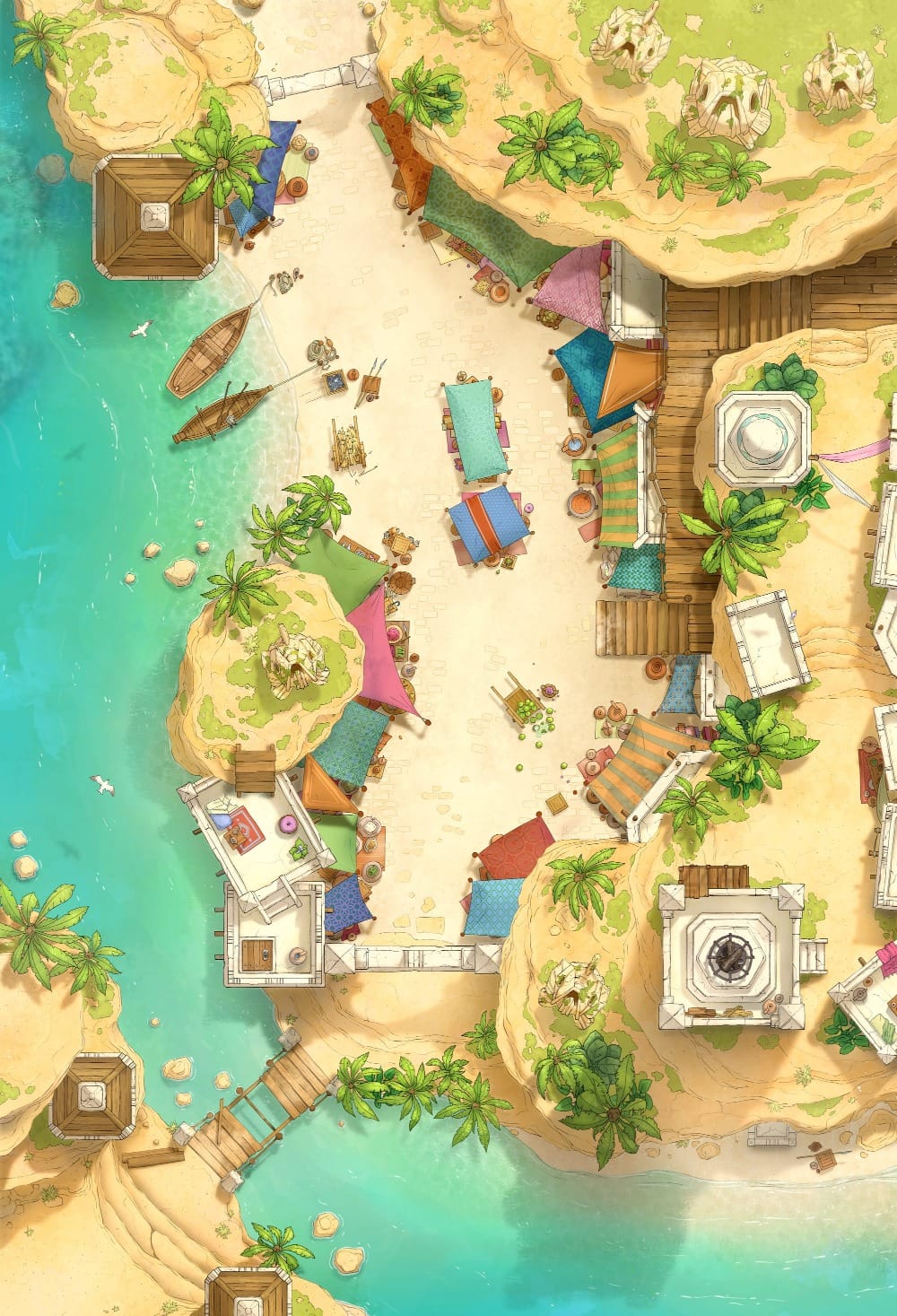
Yūsha Village is a small coastal settlement of around 300 people, home to the fisherfolk whose stolen bitan harvest sets Phantom of the Mourning Tide in motion. While the book’s artwork leans towards a more traditional East-Asian-inspired village, its written description leaves plenty of room for interpretation, making this a colourful alternative for the settlement.
This Beachside Bazaar map gives Yūsha Village a lively waterfront full of boats, market stalls, and wooden walkways. The busy layout makes for a great base for the party’s investigation as they speak with villagers and investigate the strange illness spreading through town.
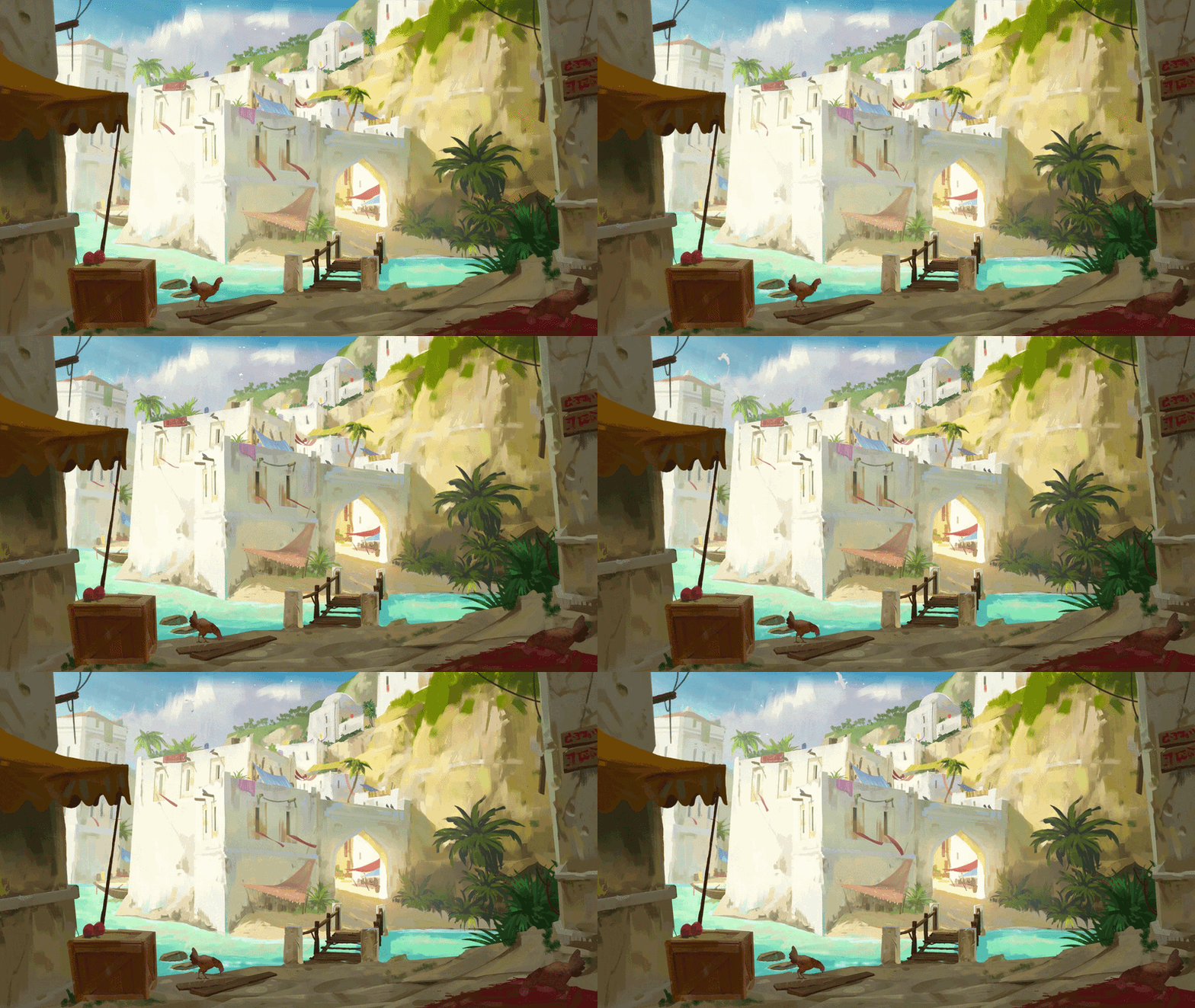
The map also comes with an animated illustration, giving players a closer look at Yūsha Village’s bright waterfront streets and coastal tides.
9. Yūsha Infirmary — Plague Hospital (Plague)
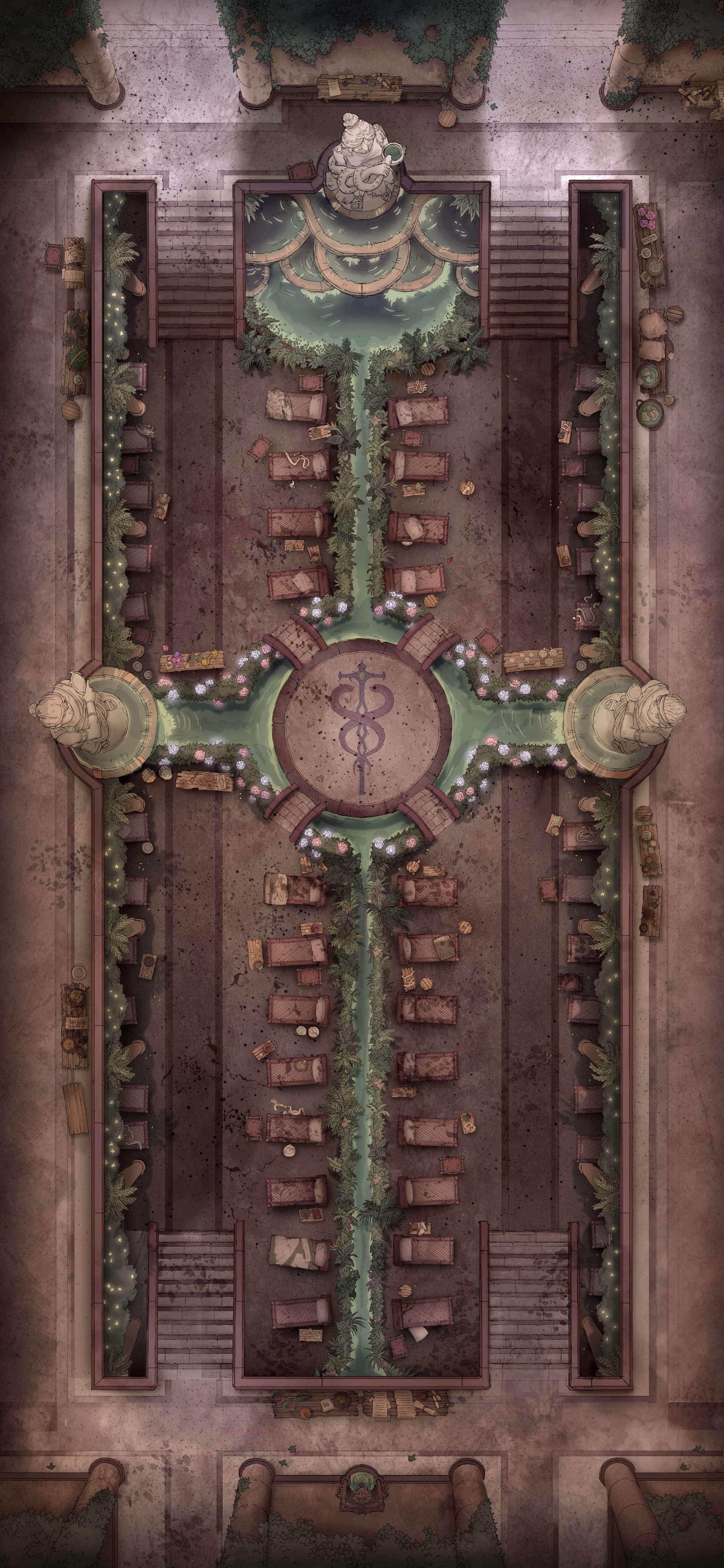
One of the party’s main investigation scenes takes place inside Yūsha’s town hall, which has been converted into a makeshift infirmary. Beds, mattresses, and rugs have been crammed together for the growing number of patients, while blankets are fastened over the doors and windows in a desperate attempt to keep Iminada’s song out—and judging by the state of the patients, it’s not working.
This Plague Hospital map gives the investigation a suitably grim setting, with rows of beds giving the party plenty of patients to move between as they investigate the mysterious whalesong and plague.
10. Umigiri Coast — Coral Witch Cottage (No Cottage)
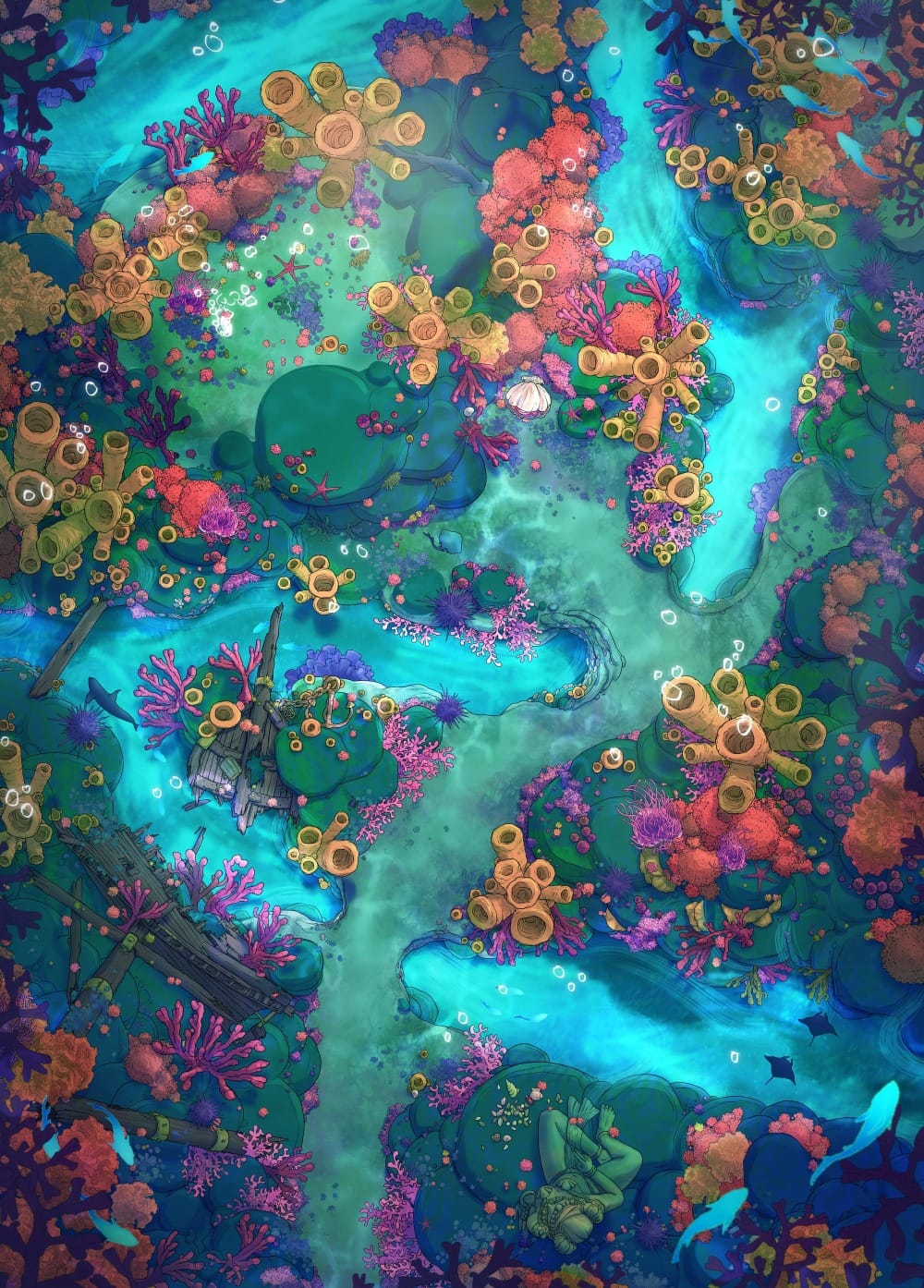
The Umigiri Coast is a stretch of shallow sea threaded with dangerous coral reefs and regularly blanketed in magical fog. Among the reefs grow organ corals, hollow formations that produce haunting notes in the wind, giving sailors an eerie warning of the sharp coral that may be hidden in the mist ahead.
This cottage-free Coral Witch Cottage map is a strong fit for the reef-filled waters off the coast, with dense coral formations giving the party plenty to explore during a stop on the journey toward Akibatsu Cove.
Deluge of the Ascendant Cascade
11. Bakuryō’s Shrines — Zen Monastery
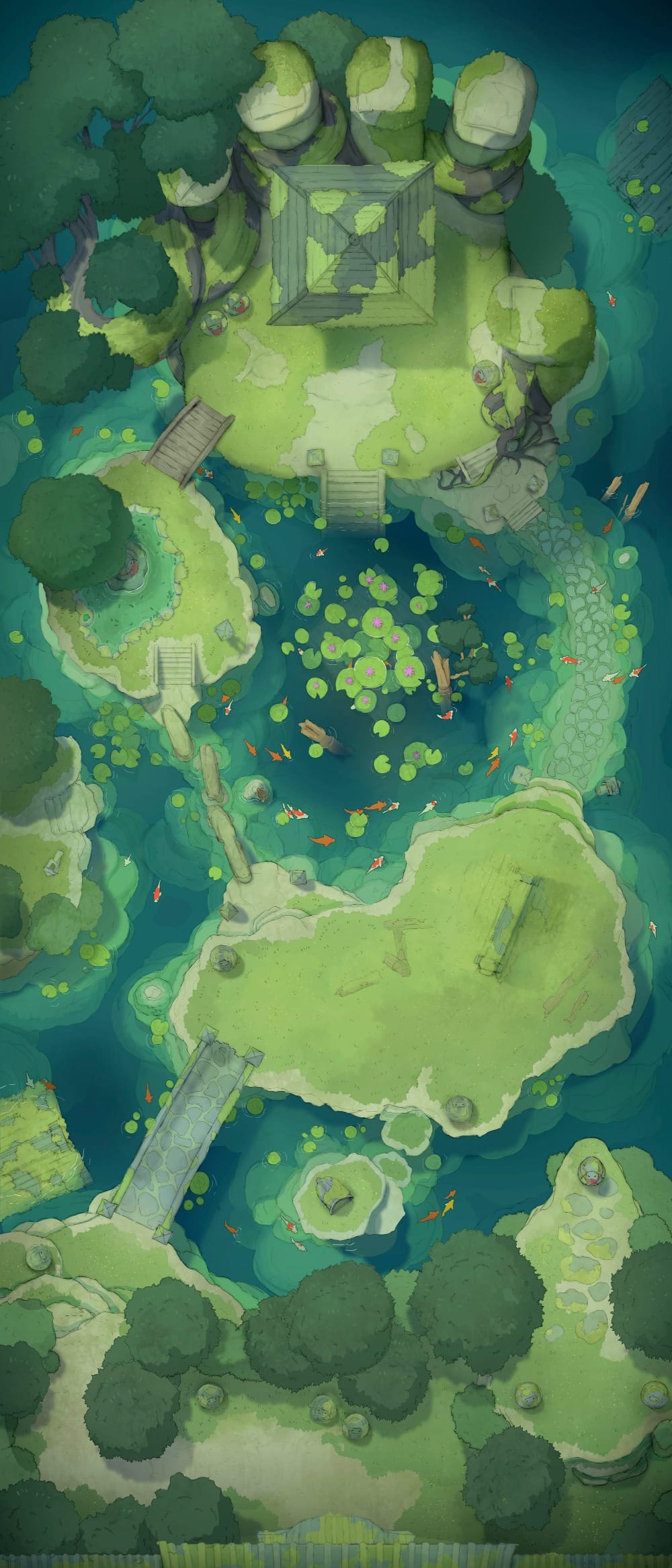
With the Hakuryū River surging uphill and muddy floodwaters swallowing fields and homes across the valley, the party’s search for Bakuryō leads them from shrine to shrine as they try to understand what went wrong. Her four shrines are scattered throughout Hakuryū Valley, each containing murals and mosaics that hide clues to restoring both Bakuryō and the river to normal.
The book provides dedicated maps for the third and fourth shrines, leaving the earlier stops open for GMs to bring to life themselves. This Zen Monastery map makes a beautiful stand-in for one of them, with its koi-filled waterways and secluded temple giving the shrine the spiritual importance you’d expect from a shrine dedicated to the region’s revered river spirit.
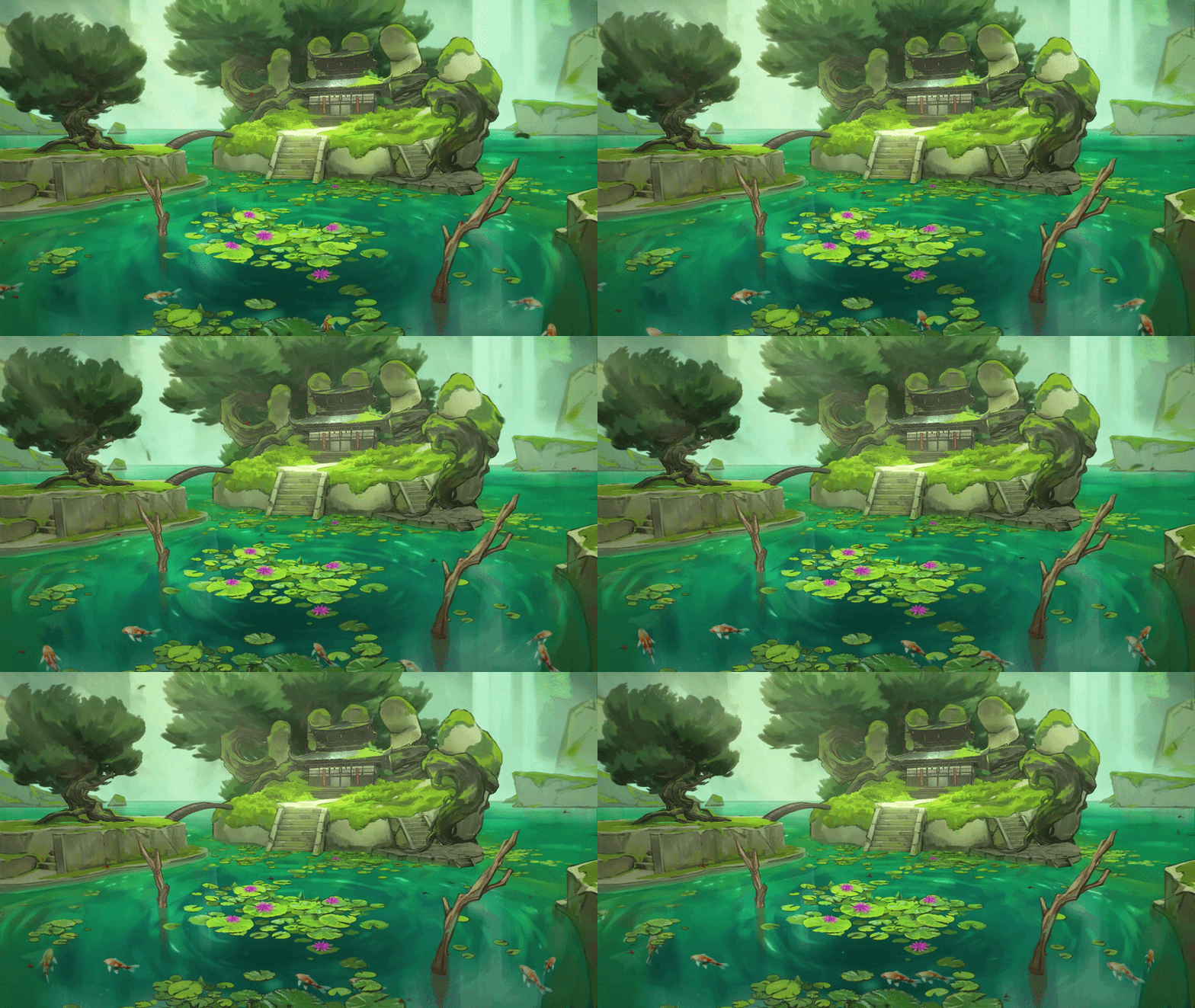
This map also comes with an animated illustration, giving players a serene view across the idyllic, koi-filled waters towards the shrine rising above the flooded landscape.
12. Bakuryo’s Shrines — Mysterious Druid Grove (Flooded)
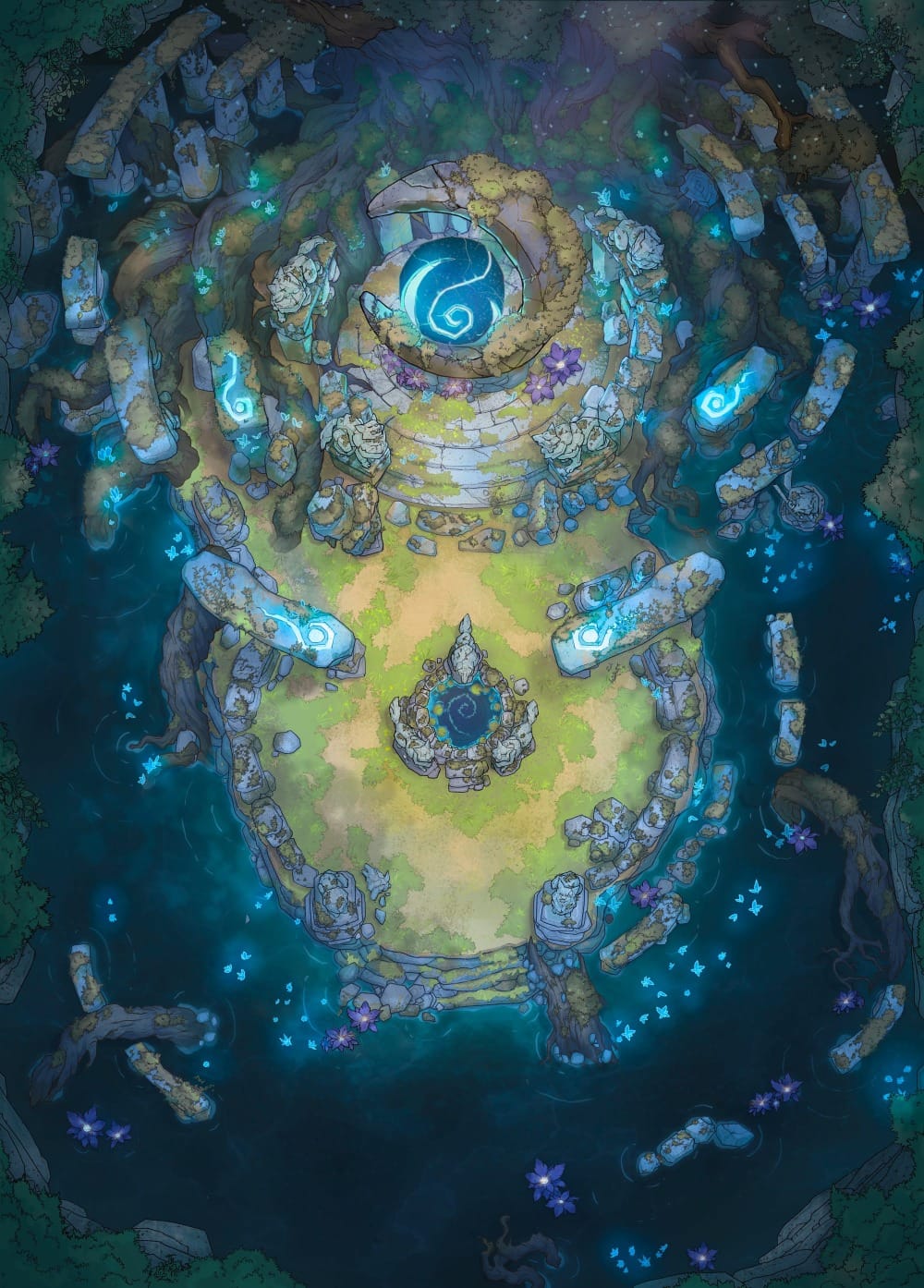
As the river continues to run backwards and wreak ecological havoc across Hakuryū Valley, each of Bakuryō’s four shrines can serve as a fresh reminder and interesting encounter about how thoroughly the landscape has been disrupted.
The flooded version of this Mysterious Druid Grove map is a possible option for another of Bakuryō’s unmapped shrines, with deep water surrounding a small ritual island surrounded by glowing stones. The drowned surroundings fit the flooding crisis in Hakuryū Valley especially well, giving the party another striking stop to investigate properly and piece together the clues hidden across the spirit’s sacred sites.
Didn’t find what you were looking for?
These picks cover some of the biggest stops in Wrath of the Kaiju, but there are plenty more ways to build out the Yokai Realms between encounters. The Czepeku Fantasy library includes over 9,000 battlemaps and variants, tagged by terrain, weather, environmental features, and biome.
If you want a hand narrowing things down, our guide to navigating the library can help you find the right battlemap for your next session. :)
👉 How to Find the Czepeku Map You Need
Start Your Adventure With a FREE Asset Pack!
Keep up to date with the latest from Czepeku, sign up to our mailing list now and receive an introductory goodie bag of fantasy and sci-fi maps, scene, and tokens.